


What Size Fishing Rod Do I Need?
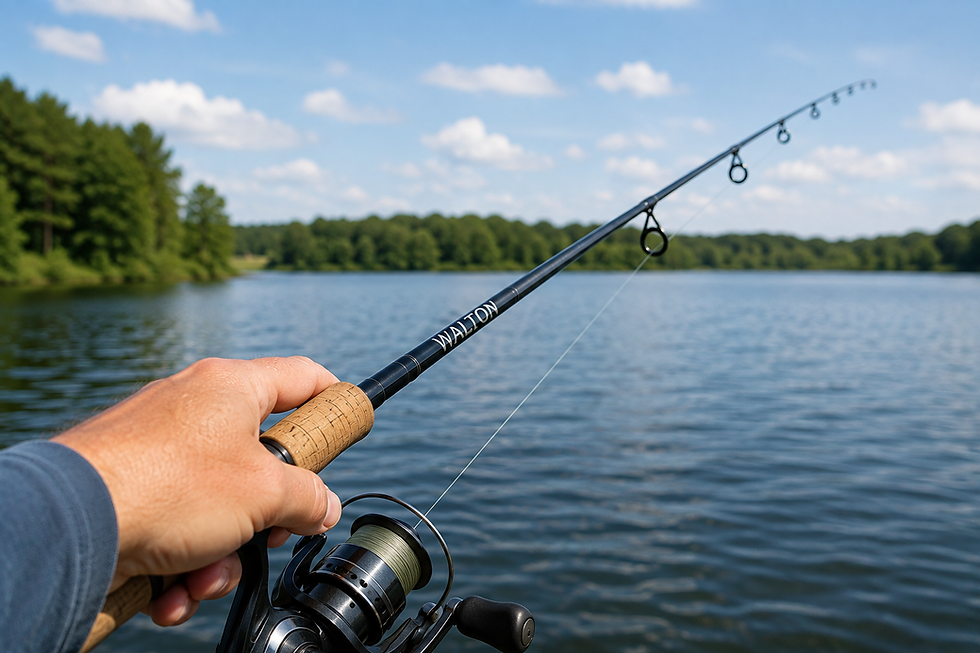
Choosing a fishing rod has gotten way more complicated than it needs to be. Walk into a tackle shop and you'll find rods in dozens of combinations of lengths, powers and actions. Many of them are supposedly designed for one very specific way of catching a fish.
There are good reasons for different rod designs, but most anglers don't need a garage full of specialized rods to go fishing. For most freshwater fishing, a rod between 6'6" and 7'3" will cover nearly everything you'll encounter. The right size comes down to what you're fishing for, where you're fishing and what you're throwing.
Here's a good place to start.
What size fishing rod do I need?
Check our our new bass series - the RCT spinning and casting rods
What You're Fishing For | Rod Length | Power |
Bluegill & Panfish | 6'–6'6" | Light |
Trout | 6'–6'6" | Light |
General Freshwater | 6'6"–7' | Medium |
General Bass Fishing | 7' | Medium or Medium Heavy |
Heavier Bass Fishing | 7'–7'3" | Medium Heavy |
Heavy Cover / Frogs | 7'3"+ | Heavy |
These aren't hard rules. They're starting points.
What Does Rod Length Actually Change?
The easiest way to think about rod length to determine "what size fishing rod do I need" is in control versus reach. Shorter rods are easier to maneuver and can be more accurate in tight spaces. If you're fishing a small creek, walking a wooded shoreline or trying to cast beneath overhanging branches, a 6' or 6'6" rod can be a pleasure to fish.
Longer rods generally give you more casting distance, leverage and line control. That's why 7' and 7'3" rods have become so common in bass fishing, particularly when anglers are making longer casts across open water. Neither is inherently better. A 7'3" rod isn't an upgrade from a 6'6" rod any more than a hammer is an upgrade from a screwdriver. They're simply different tools.
What's the Best All-Around Fishing Rod?
If you want one rod for a little bit of everything, it's hard to go wrong with a 6'6" to 7' medium-power spinning rod. That setup can handle bass, walleye, larger panfish, trout and most of the freshwater fishing the average angler is likely to encounter. You can throw soft plastics, small crankbaits, spinners, jigs or put a worm under a bobber.
If we had to choose just one, we'd probably land on a 7' medium spinning rod. It won't be perfect for every technique, but that's not the point. An all-around rod should be good at a lot of things rather than perfect at one.
What Size Fishing Rod Do I Need for Bass Fishing?
Bass fishing is where rod selection can become unnecessarily complicated.
For most anglers, a 7' medium or medium-heavy rod is the place to start. A medium rod is a versatile choice for lighter soft plastics, finesse presentations and many common bass lures. A medium-heavy gives you more backbone for Texas rigs, jigs, spinnerbaits, ChatterBaits and fishing around cover.
Moving up to 7'3" gives you a little more casting distance and leverage, which can be useful with heavier presentations or when fishing larger water. If you're throwing frogs into thick vegetation or pulling fish from heavy cover, that's when a heavy-power rod starts earning its keep.
Do you eventually benefit from having several bass rods? Absolutely. But you don't need a different rod for every lure in your tackle box.
Start versatile. Specialize when your fishing gives you a reason to.
What About Trout and Panfish?
Smaller fish are usually more fun on lighter equipment. For trout, bluegill, crappie and other panfish, a 6' to 6'6" light spinning rod is a great place to start. It handles small lures and light line well while allowing smaller fish to actually bend the rod and put up a fight.
If you're fishing tiny wooded trout streams, you may prefer something shorter. On bigger rivers where casting distance matters, moving toward 7' can be helpful.
Where you fish matters just as much as what you're trying to catch. You can also always look into fly fishing, but that's a whole different word of rods and actions.
Length, Power and Action Aren't the Same Thing
This is where rod shopping confuses a lot of people. Length is simply how long the rod is.
Power describes how much force it takes to bend the rod. That's where terms like Light, Medium, Medium Heavy and Heavy come from.
Action describes where the rod bends. A fast-action rod bends primarily toward the tip, while a moderate-action rod flexes farther down the blank. So a 7' medium rod and a 7' heavy rod might be exactly the same length while feeling completely different on the water.
Understanding those three terms will tell you far more about a fishing rod than whatever marketing name happens to be printed on the blank.
Don't Overthink It
If you're buying your first fishing rod, you don't need to predict every lure you'll ever throw or every fish you'll ever catch. For panfish and trout, start around 6' to 6'6" Light. For general freshwater fishing, a 7' Medium is incredibly versatile. For bass, a 7' Medium or Medium Heavy will cover a huge amount of fishing. When heavier lures and thick cover become part of the equation, move toward 7'3" Medium Heavy or Heavy.
As you spend more time fishing, you'll figure out what you want next. Maybe you'll wish you had a little more casting distance. Maybe you want something lighter for small streams. Maybe you need more backbone around weeds. That's when another rod makes sense. Until then, pick a versatile setup, tie something on and go fishing.
Quick Questions
What is the best fishing rod size for a beginner? A 6'6" to 7' medium spinning rod is an excellent starting point for most freshwater anglers.
Is a 6'6" or 7' fishing rod better? A 6'6" rod offers a little more maneuverability, while a 7' rod generally offers more casting distance and reach. For general-purpose freshwater fishing, we'd lean toward 7'.
What size fishing rod should I use for bass? A 7' medium or medium-heavy rod will handle a large percentage of bass fishing. Heavier techniques and thick cover may call for a 7'3" heavy rod.
Do longer fishing rods cast farther? Generally, yes. A longer rod can help generate more casting distance, although lure weight, line, reel, rod action and casting technique all play a role.


Comments